Protecting Your Lower-Level Investment From Below-Grade Humidity and Water Risks
Finishing an underutilized lower level is one of the most practical strategies for expanding livable square footage in your home, yet below-grade spaces present unique environmental considerations. When preparing for basement finishing in Aurora, CO, managing potential moisture issues stands as a fundamental step toward building a durable, healthy, and comfortable living area. Lower-level concrete slabs and foundation walls naturally interact with surrounding soil, atmospheric humidity, and changing weather conditions. Neglecting water management during the initial design phase can lead to compromised building materials, musty odors, or costly corrections down the road. At Lucas Remodeling, our licensed contractors design and implement comprehensive moisture control strategies long before the first wall is framed or drywall is installed.
To ensure your investment remains protected, addressing moisture requires a systematic evaluation of your home’s existing foundation, vapor barriers, subfloor preparation, and climate control. Unfinished concrete continuously absorbs and releases ambient moisture vapor. Without appropriate insulation, sealing, and drainage measures, this moisture becomes trapped behind finished walls or beneath floor coverings. By establishing a rigorous physical barrier and coordinating trades in the proper sequence, Lucas Remodeling creates basement spaces that look exceptional and remain structurally resilient for decades.
Understanding Moisture Dynamics in Aurora Basements
Before installing drywall, subfloors, or trim, homeowners must understand how moisture behaves in below-grade environments. Concrete is a naturally porous material. The earth surrounding your foundation contains varying levels of water, which exert hydrostatic pressure against the external walls. Over time, moisture migrates through microscopic pores in concrete, entering the home as vapor or subtle seepage. Additionally, temperature differentials between warmer indoor air and cooler subterranean walls create ideal conditions for condensation if insulation is improperly installed or missing entirely.
In Front Range communities, local soil profiles and seasonal shifts create specific moisture challenges. Established neighborhoods around Del Mar Park or Aurora Hills Golf Course may feature older foundations with unique drainage characteristics, while newer developments near Southlands, Saddle Rock, Tallyn’s Reach, or Murphy Creek present different structural layouts. Regardless of neighborhood age, subterranean living areas naturally experience higher relative humidity than main-floor rooms. Unchecked vapor migration can cause wood framing to swell, lead to surface deterioration, and negatively affect indoor air quality. Understanding these physical dynamics allows us to implement preventive solutions tailored to your specific lower-level architecture during basement finishing in Aurora, CO.
Ready to Transform Your Unfinished Basement?
Contact Lucas Remodeling today to begin your basement finishing project in Aurora, CO.
Primary Sources of Below-Grade Water Intrusion
- Groundwater Infiltration: Water accumulating around exterior foundation walls moves inward through minor concrete fissures or porous masonry.
- Ambient Condensation: Warm, humid indoor air meets cold concrete surfaces, causing moisture droplets to collect behind wall assemblies.
- Internal Plumbing Vapor: Unvented bathrooms, laundry rooms, or wet bars release internal steam that remains trapped without adequate mechanical ventilation.
Recognizing these pathways allows contractors to construct multi-layered defense systems that protect your living area from both external water and internal humidity.
The Critical Importance of Proper Moisture Control
Investing in effective moisture management is essential for preserving the long-term structural integrity and overall comfort of your home. When moisture accumulates behind enclosed walls, standard building materials such as untreated wood framing, drywall, and carpet padding deteriorate rapidly. Wood studs can warp or decay, fasteners can corrode, and organic materials can break down over time. By incorporating proper vapor barriers, subfloors, and specialized wall assemblies during basement finishing in Aurora, CO, Lucas Remodeling ensures that structural components remain dry, sound, and fully supported throughout their lifespan.
Beyond protecting physical materials, controlling moisture protects the health and comfort of your household. Elevated subterranean humidity often leads to persistent damp odors, clammy flooring, and uncomfortable indoor air quality. Excess moisture can also disrupt the balance of the household HVAC system, making the space feel significantly cooler in winter and stickier during the summer months. When moisture dynamics are managed correctly, living spaces achieve a stable thermal feel and fresh indoor atmosphere. Whether you are constructing a private guest suite, a quiet home office, or a custom entertainment area, prioritizing moisture control transforms an unfinished cellar into a seamless extension of your upper floors.
Best Practices for Moisture Management During Construction
Managing moisture effectively demands an organized construction sequence, high-quality materials, and experienced coordination among trades. At Lucas Remodeling, our team addresses below-grade moisture using a systematic, step-by-step approach integrated directly into the framing, electrical, and insulation phases.
Initial Assessment and Surface Preparation
The moisture control process begins with a complete inspection of the bare concrete slab and foundation walls. Our team evaluates existing ceiling height, window placement, utility locations, and any historical evidence of water tracking. Surface cracks or efflorescence—salty deposits left behind by water that has evaporated—are thoroughly cleaned and sealed with high-performance masonry sealants. Addressing minor surface imperfections creates a clean, stable foundation before framing begins.
Exterior Drainage and Foundation Maintenance
Preventing water intrusion begins outside the foundation wall. Proper grading, functioning gutters, and extended downspouts direct rainwater and melting snow safely away from the home’s perimeter. Ensuring exterior landscape drainage directs water away from foundation walls significantly reduces hydrostatic pressure against lower-level concrete.
Vapor Barriers and Thermal Insulation
Controlling vapor transmission requires continuous, impermeable physical barriers. Applying specialized moisture-resistant rigid foam insulation or heavy-duty vapor retarders directly against concrete foundation walls prevents warm indoor air from contacting cold concrete surfaces. This separation stops condensation from forming behind wall cavities. Properly installed insulation also improves thermal performance, keeping finished spaces warm in winter and cool in summer while reducing energy consumption during basement finishing in Aurora, CO.
Subfloor Systems and Floating Floor Installation
Directly laying carpet or laminate over bare concrete invites moisture absorption and cold walking surfaces. Lucas Remodeling utilizes dedicated subfloor panels or specialized underlayments designed for below-grade applications. These materials elevate finished flooring slightly off the raw concrete, creating an air space that allows concrete to breathe while insulating the living area. Water-resistant flooring choices—such as luxury vinyl plank—provide additional protection against everyday spills and sub-slab dampness.
Dedicated Mechanical Ventilation and Climate Integration
Proper air movement is indispensable for long-term moisture balance. Incorporating dedicated exhaust fans in basement bathrooms, laundry areas, or wet bars removes localized moisture at its source. Extending supply and return air ducts from your main heating and cooling system helps maintain continuous airflow, stabilizing indoor humidity. In certain layouts, installing a dedicated dehumidification unit or a fresh-air exchange system provides precise environmental control.
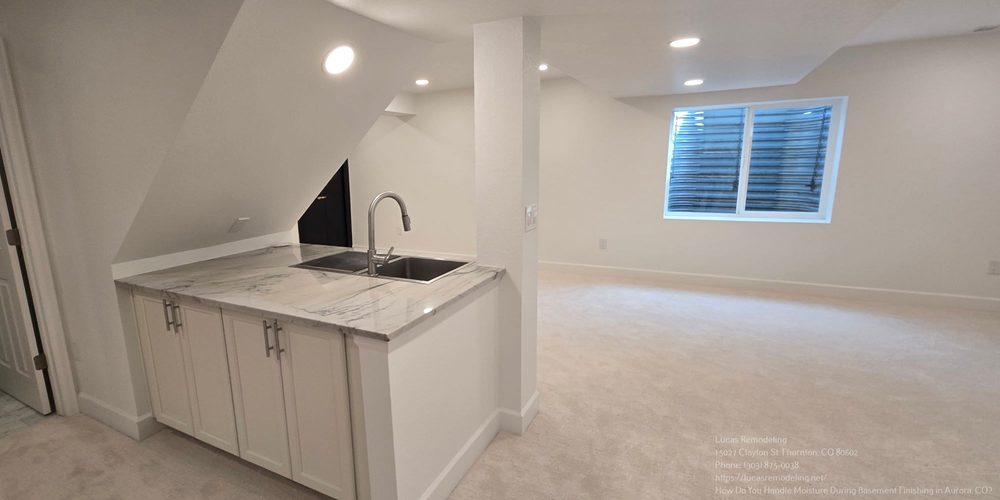
Lucas Remodeling: Your Local Aurora Basement Finishing Partner
Navigating the technical requirements of below-grade construction requires a skilled contractor who understands local building codes, structural considerations, and climate conditions. Since 2017, Lucas Remodeling has specialized in transforming unfinished and outdated lower levels into highly functional, beautifully crafted living spaces. Our licensed remodeling team provides complete project coordination, managing every detail from initial design and permit acquisition through framing, rough plumbing, electrical wiring, insulation, drywall, and custom trim work.
We recognize that a basement remodel takes place inside an active, occupied home. Our team emphasizes clear project timelines, transparent communication, and daily jobsite cleanup to minimize disruption to your family’s routine. Whether your property is located in an established central neighborhood or a newer development along the E-470 corridor near Aurora Reservoir or Buckley Space Force Base, Lucas Remodeling delivers custom design solutions engineered around your lifestyle. We evaluate mechanical infrastructure, headroom, egress requirements, and moisture balance upfront—eliminating unexpected surprises and delivering a finished basement that feels completely intentional.
To ensure your investment is built to last, partner with an experienced team that understands subterranean moisture protection. Contact Lucas Remodeling to schedule a consultation for your basement finishing in Aurora, CO, and let us help you build a dry, comfortable, and custom lower-level space.
Ready to Transform Your Unfinished Basement?
Contact Lucas Remodeling today to begin your basement finishing project in Aurora, CO.